
As told from a must read autobiography “MY LIFE” by Owek. John Winston Katende

The founding of Jimmy Katumba with The Ebonies in 1977 was extraordinary, unconventional, serendipitous, and transformative. It all began with a voice that stopped me in my tracks. One day, as I watched television, I was captivated by a singer performing church music. His voice was deep, rich, and powerful, filled with grace and emotion. That voice belonged to Jimmy Katumba. At the time, I didn’t know him, but I found myself wishing I did.
Not long after, as if fate had conspired to make it happen, I saw him in person while walking along Kampala Road. Without hesitation, I approached him.

I approached him with hesitation, expressing how much I admired his talent after having seen him perform on television. Jimmy was humble and open, sharing his passion for music and his desire to pursue it further, though he lacked the means to develop it.
That was the spark that ignited a conversation, a friendship, and a shared vision. Jimmy spoke of his dream to creating music, and I envisioned something bigger—a group that could weave music, drama, and storytelling into a tapestry that would resonate with both religious and secular audiences.
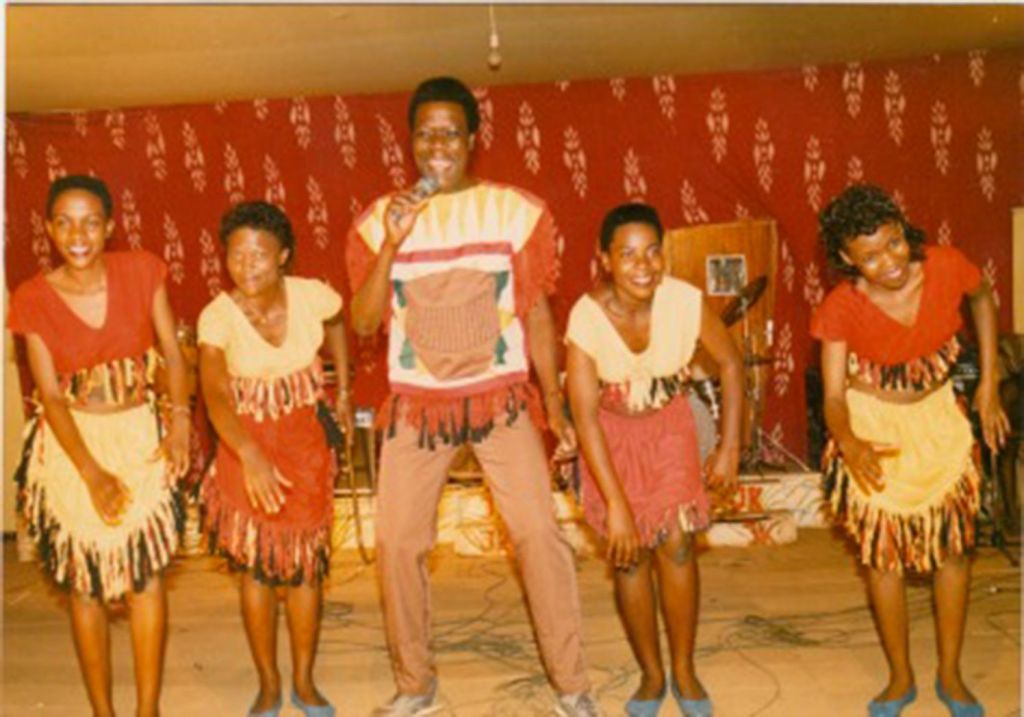
Jimmy was already leading gospel groups like The Eschatos Brides, whose spiritual harmonies touched hearts in countless church congregations and community gatherings. Yet, I saw potential that stretched beyond their gospel roots, a potential that could revolutionize Uganda’s entertainment landscape. Together, we decided to form a new group that would celebrate the richness of identity. We named it The Ebonies, a tribute to the beauty of blackness.
Work began. We recruited his girlfriend , Stella Nanteza , and my cousin Jov Nakimuli. They were soon joined by Isaac “Jackie” and other talented individuals who shared our vision.

As the group’s performances gained momentum, it became clear that Jimny’s exceptional talent and growing popularity should be more closely tied to The Ebonies. Shortly thereafter, we linked his name to the group, rebranding it as Jimny Katumba with The Ebonies.
In 1978, we staged our first major music show in partnership with the Anglican Church of Uganda, aimed at raising funds for the construction of Church House. The event was a resounding success, collecting over UGX 600,000, a remarkable achievement for a single performance at the time.
This milestone not only established us as a cultural force but also set the tone for even greater aspirations. As our popularity grew, so did our ambitions. To nurture our creativity and expand our vision, we established Ebony Village, a vibrant hub.
Our headquarters served as the place where we experimented with new ideas and evolved as artists.
It was here that we refined our craft. In the mid-1980s, we took another leap forward by establishing Theatre Excelsior, now known as Bat Valley Theatre, a venue that transformed Uganda’s theatrical landscape. It became a symbol of innovation and excellence, hosting performances that defined an era in Ugandan entertainment.
Our journey was not without its obstacles. Political instability and challenges tested our resolve, but we never wavered in our inspiring and entertaining commitment to audiences. The late 1980s marked our golden years, characterized by international success and the expansion of our artistic endeavors.
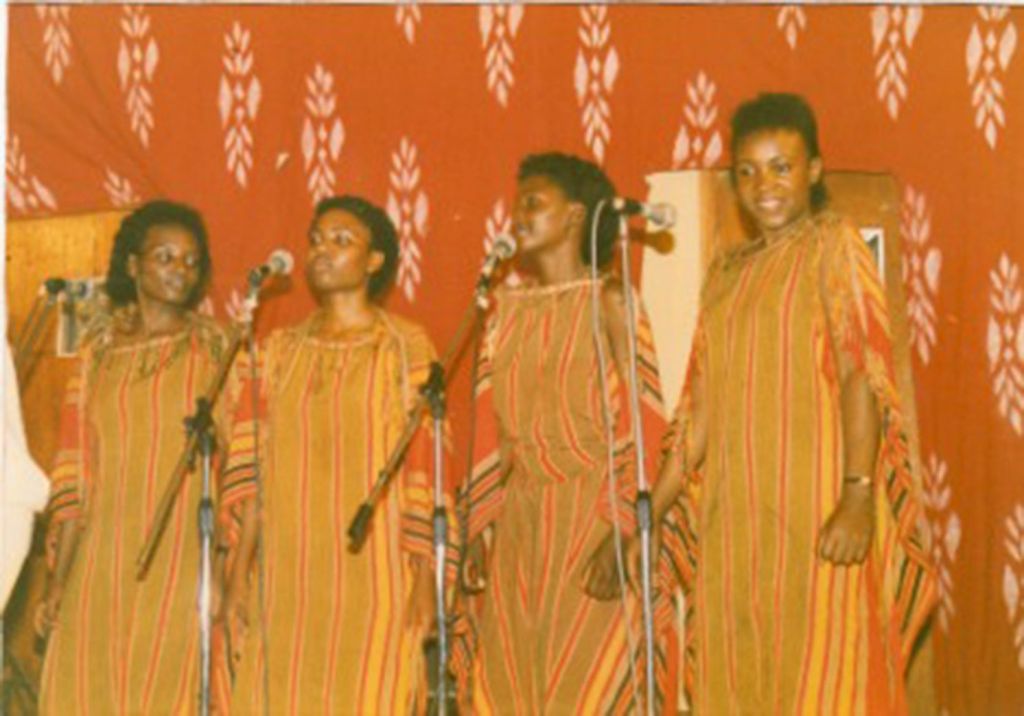
In 1981, The Ebonies ventured beyond Uganda’s borders for the first time, performing in Tanzania to honor President Julius Nyerere for his instrumental role in Uganda’s liberation. Our performance at Kilimanjaro Airport was a proud moment in our history, with Nyerere himself applauding our stirring rendition of the Chama Cha Mapinduzi, the Tanzanian national anthem.However, challenges awaited upon our return to Uganda. Tensions arose when we refused to include a song affiliated with the Uganda People’s Congress Party in our performances, resulting in the confiscation of our instruments by the authorities. Months of persistent lobbying eventually led to the resolution of the issue.
This experience with our equipment served as a reminder that in Uganda, performing was as much about avoiding politics as it was about creating art. It should be noted that since its inception, The Ebonies have been and always remained a non-political entertainment group that promotes arts and culture. Despite the hurdles, our ventures solidified our place in Ugandan entertainment history.
In 1991, Jimmy Katumba relocated to the United States, marking the end of an era for Jimmy Katumba with The Ebonies. However, this was not the end of our journey. We chose to return to our roots by rebranding once again as The Ebonies.

This transition signified not just continuity but also a commitment to the collective vision that had brought us together in the first place.

This reimagined group grew into a cultural institution, embracing new media and forms. Our groundbreaking storytelling television series became a household name, cementing our legacy as trailblazers in Ugandan entertainment.
 THE EBONIES UGANDA